
How Aluminum Extrusion Manufacturers Shape Modern Industry
Aluminum extrusion sits quietly behind much of what we build, frame, and assemble. Walk through any commercial building, stand near an assembly line, or examine the casing of a heat sink, and you'll find profiles shaped through a process that hasn't fundamentally changed in decades—yet continues to evolve in precision and capability. An aluminum extrusion manufacturer doesn't just produce metal shapes; they translate design intent into physical components that must meet exact dimensional tolerances, surface requirements, and mechanical properties across vastly different applications.
The role extends beyond pressing heated aluminum through a die. It involves understanding how a profile will be mounted, what loads it will bear, how its surface will interact with its environment, and whether the chosen alloy and temper can deliver the required strength without adding unnecessary weight. This level of engagement separates commodity production from manufacturing partnerships that influence project outcomes.
What Defines an Aluminum Extrusion Manufacturer
At its core, an aluminum extrusion manufacturer operates large hydraulic presses—typically ranging from 600 to 1800 tons of force—that push heated aluminum billets through steel dies. The billet, heated to around 450–500°C, becomes pliable enough to flow through the die opening, emerging as a continuous profile that mirrors the die's cross-sectional shape. This profile is then stretched, cut, aged, and finished according to project specifications.
But the equipment tells only part of the story. The manufacturer's capacity to produce ultra-thin walls (down to 0.4 mm in specialized cases), manage tight tolerances, and maintain consistent metallurgical properties across production runs determines whether they can serve demanding sectors like aerospace, automotive, or precision electronics. A manufacturer with seven extrusion lines and integrated surface treatment capabilities can handle both high-volume standardized profiles and small-batch custom geometries without forcing clients to split orders across multiple suppliers.
The supply chain integration matters as much as the press tonnage. A network of die makers, alloy suppliers, surface treatment specialists, and logistics partners allows the manufacturer to compress lead times and respond to design changes without halting production. When a client needs to shift from anodized to powder-coated finishes mid-project, or adjust a profile dimension by 0.2 mm, the manufacturer's ability to coordinate these changes across the supply chain prevents delays that cascade through construction schedules or product launches.
How Customization Works in Aluminum Extrusion
Custom aluminum extrusion starts with a drawing—sometimes a CAD file, sometimes a sketch with critical dimensions marked. The manufacturer's engineering team reviews the geometry for extrudability: are the wall thicknesses consistent enough to avoid differential cooling? Do any sharp internal corners create stress concentrations that could lead to cracking? Is the tongue ratio (the ratio of the smallest to largest dimension in the die opening) within acceptable limits?
Once the design passes review, die fabrication begins. Dies are typically machined from hardened tool steel and can cost several thousand dollars, depending on complexity. A simple rectangular tube die is straightforward; a profile with internal voids, varying wall thicknesses, and interlocking features requires precision EDM (electrical discharge machining) and multiple trial runs to refine the metal flow. The die investment is often amortized across the production volume, making custom extrusion economically viable for runs as small as a few hundred kilograms in some cases.
Alloy selection follows design validation. The 6000-series alloys (6061, 6063) dominate architectural and structural applications due to their balance of strength, corrosion resistance, and extrudability. The 6063 alloy extrudes more easily and yields excellent surface finishes, making it the default choice for decorative trim and curtain wall frames. The 6061 alloy offers higher tensile strength—roughly 20% more than 6063 in the T6 temper—suited for load-bearing profiles in assembly line framing or mechanical components.
Surface treatment options expand the profile's functional range. Anodizing thickens the natural oxide layer, improving corrosion resistance and allowing color through dye absorption. Powder coating provides a durable, uniform finish in a wider color palette but adds a slight thickness (typically 60–80 microns) that must be accounted for in assemblies with tight tolerances. Wood grain finishes combine a base coat with a printed wood texture, offering the appearance of timber without the maintenance burden—common in residential sunroom framing.
Where Aluminum Extrusion Profiles Get Applied
Architectural systems consume a significant share of extruded aluminum. Curtain wall mullions, window frames, and door profiles require consistent cross-sections, precise miters, and surface finishes that withstand decades of UV exposure and thermal cycling. The profiles often incorporate thermal breaks—insulating inserts that reduce heat transfer across the frame—achieved by extruding the profile in two halves and mechanically joining them around a polyamide barrier.
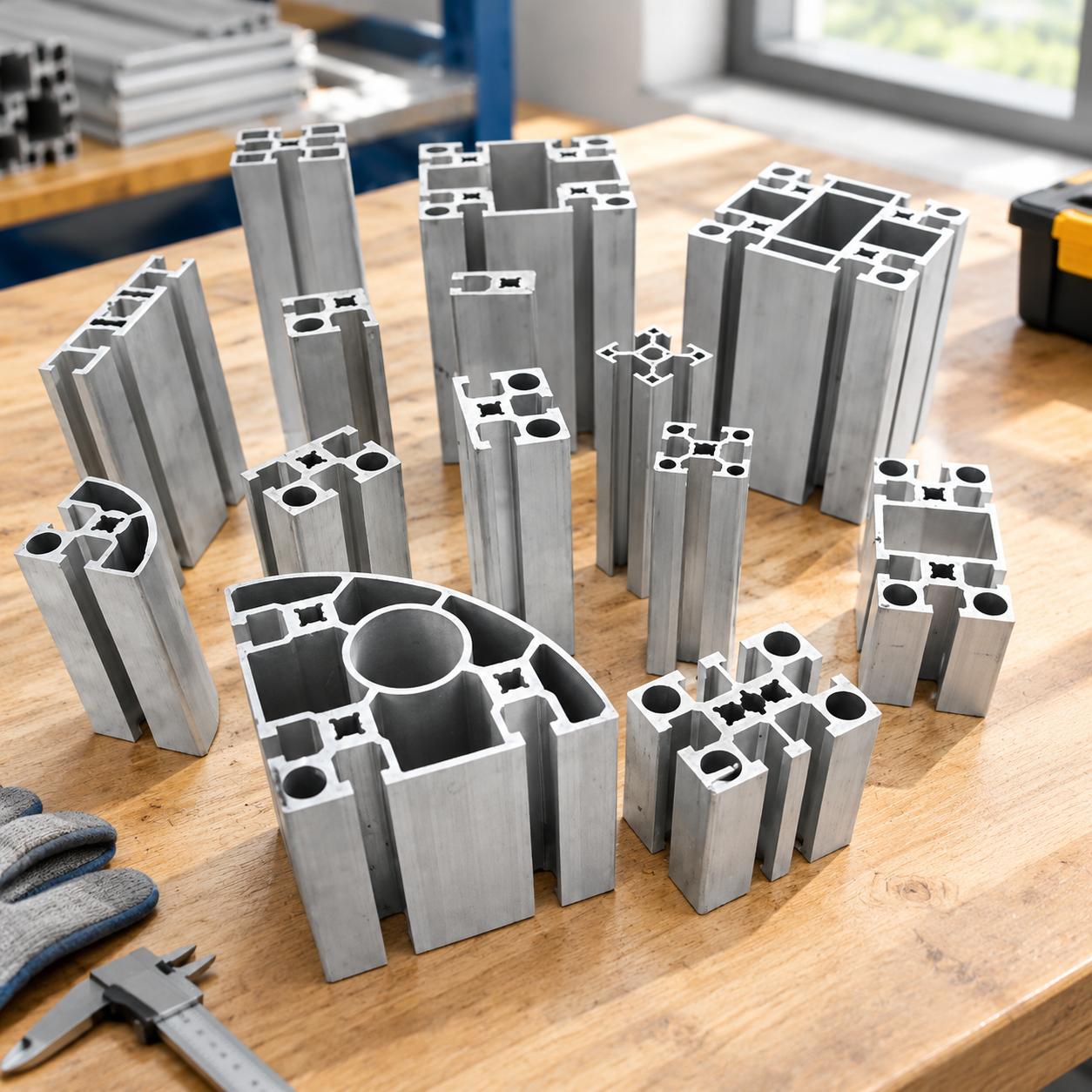
Industrial applications demand different priorities. Assembly line framing uses T-slot profiles with internal channels that accept bolts at any point along the length, allowing modular reconfiguration without welding or drilling. Heat sinks rely on profiles with dense fin arrays to maximize surface area for convective cooling; the fin spacing and base thickness are optimized through thermal modeling to balance airflow resistance against heat dissipation efficiency.
Decorative trim and skirting boards represent another category where extrusion's geometric flexibility proves valuable. These profiles often combine functional features—cable channels, mounting clips—with aesthetic details like rounded edges or shadow lines. The ability to extrude these elements as a single piece reduces assembly labor compared to fabricating them from bent sheet metal or molded plastic.
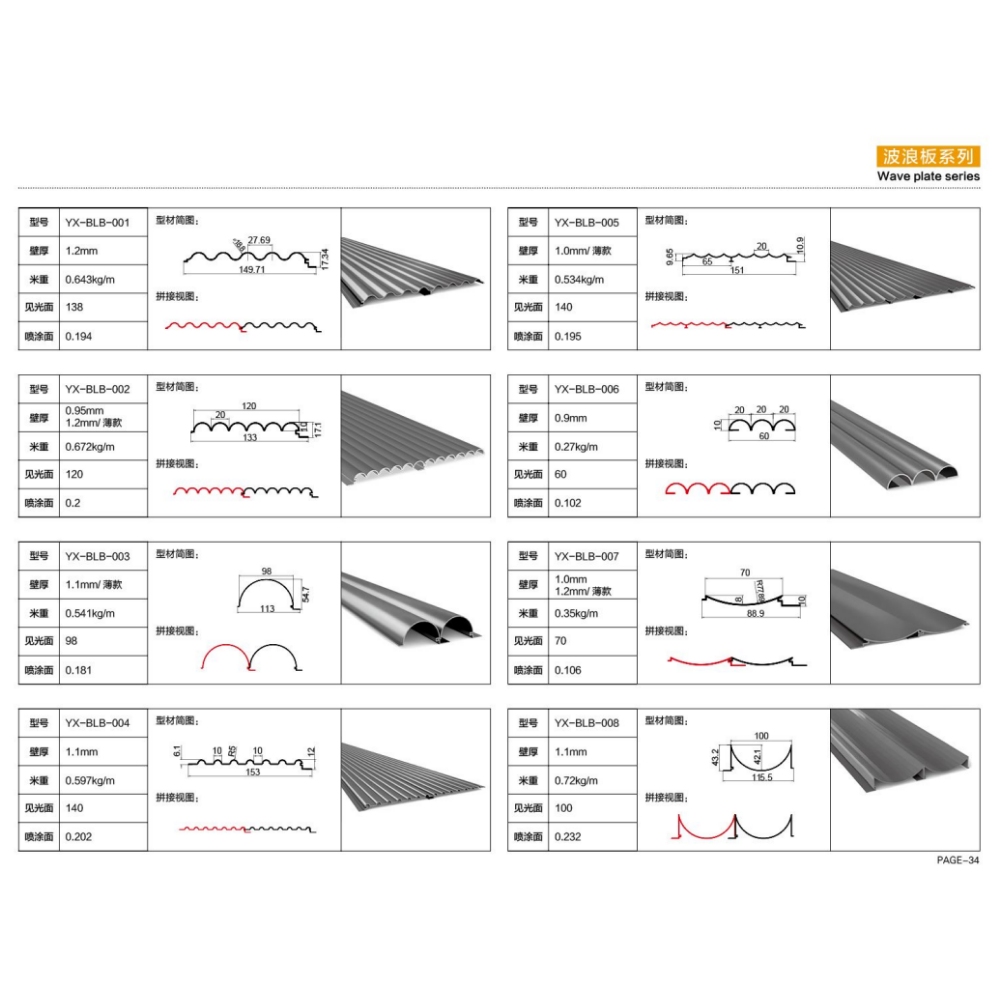
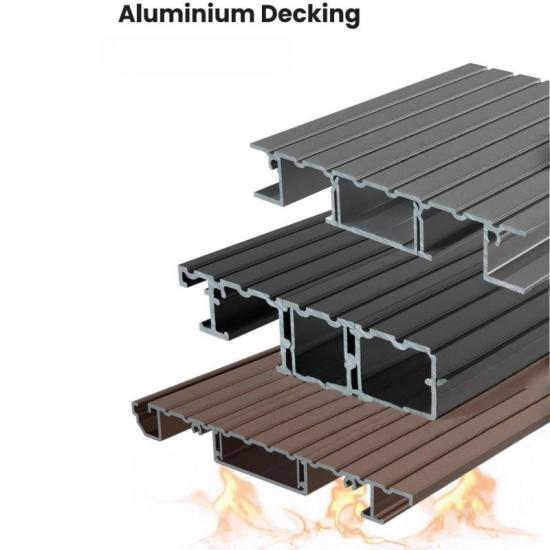
Flooring and roofing systems use extrusions as structural components and fastening interfaces. Corrugated roofing panels, for instance, may incorporate extruded edge trims that seal against the underlying structure while providing a finished appearance. The profiles must maintain dimensional stability across temperature swings and resist deformation under snow loads or wind uplift.
When to Engage an Aluminum Extrusion Manufacturer Early
Design-for-manufacturability conversations should begin before finalizing geometry. A profile that looks feasible on screen may present extrusion challenges: walls too thin to maintain shape during cooling, sections that trap air and create voids, or features that require secondary machining better integrated into the extrusion itself. Early engagement allows the manufacturer to suggest modifications that preserve the design intent while simplifying production.
Tooling lead time often surprises first-time clients. Die fabrication can take four to six weeks for complex geometries, and the initial extrusion runs may require die adjustments to achieve the specified dimensions and surface finish. Projects with tight deadlines benefit from parallel activities: finalizing surface treatment specifications while the die is being made, or pre-qualifying the alloy temper while trial extrusions are underway.
Volume planning influences cost structure. Extrusion setup involves heating the press, loading the die, and running several feet of profile before steady-state conditions are reached. These startup costs are spread across the production run, so longer runs yield lower per-kilogram costs. But manufacturers equipped with multiple press lines can economically handle shorter runs by batching similar profiles or scheduling them during press changeovers.
Why Alloy and Temper Selection Matters
The choice between 6061-T6 and 6063-T5 isn't trivial. The T6 temper involves solution heat treatment followed by artificial aging, producing higher strength at the cost of increased processing time and energy. The T5 temper skips the solution heat treatment, relying instead on the heat retained from extrusion for a partial age-hardening effect. This yields a profile that's softer but more ductile—useful when the profile will be bent, punched, or otherwise formed after extrusion.
Corrosion resistance varies by alloy and environment. Marine or coastal installations favor 6063 with anodized finishes, where the thicker oxide layer protects against salt-laden air. Industrial environments with chemical exposure may require 5000-series alloys (5052, 5083) that offer better resistance to alkaline solutions, though these alloys are harder to extrude and typically cost more.
Thermal expansion coefficients matter in large assemblies. Aluminum expands roughly twice as much as steel per degree Celsius, so mixed-material structures require expansion joints or slotted connections. A 10-meter curtain wall mullion will expand by about 2.4 mm over a 100°C temperature swing—a dimension that must be accommodated in the mounting system to prevent buckling or stress concentration.
Managing Surface Treatment and Finishing
Surface treatment extends beyond aesthetics. Anodized finishes harden the surface, improving scratch resistance—critical for profiles installed at accessible heights where contact is frequent. The anodizing process also provides electrical insulation, relevant in applications where the profile might contact live circuits or serve as a mounting surface for electronic components.
Powder coating offers color consistency across large production runs, something difficult to achieve with anodizing and dye. The electrostatic application ensures uniform coverage on complex geometries, and the cured coating resists chipping and fading better than conventional paint. However, powder-coated profiles can't be welded without damaging the finish, so assemblies requiring welded joints must either use bare or anodized profiles, or schedule coating after welding.
Wood grain finishes have improved significantly in durability and realism. Modern sublimation processes bond the printed image into the coating, preventing the pattern from wearing off under abrasion. These finishes allow aluminum to substitute for wood in applications where dimensional stability, insect resistance, or fire ratings favor metal, while maintaining the visual warmth of timber.
PVDF (polyvinylidene fluoride) coatings represent the high end of exterior finishes. Used primarily on architectural panels and curtain wall systems, PVDF resists UV degradation, maintains color for decades, and sheds dirt through its low surface energy. The coating is applied in two or three layers, with each layer cured before the next is applied, resulting in a total thickness of 30–40 microns.
Assessing Manufacturer Capability and Capacity
Press tonnage correlates with the size and complexity of profiles a manufacturer can produce. A 600-ton press handles smaller, lighter profiles—trim, edge caps, simple tubes. An 1800-ton press can extrude large, multi-void sections with thick walls, such as structural mullions or heavy-duty framing components. The press size also influences extrusion speed and cooling rates, which affect the profile's microstructure and mechanical properties.
Production capacity isn't just about press count. Surface treatment throughput often becomes the bottleneck. A manufacturer with one anodizing line and one powder coating line may struggle to handle multiple large orders with different finish requirements simultaneously. Monthly output figures—moving from tens of tons to nearly 1,000 tons—indicate scaling capability, but consistency matters more than peak capacity for clients with ongoing supply needs.
Quality systems reveal a manufacturer's commitment to repeatability. ISO 9001 certification is common; more rigorous standards like AS9100 (aerospace) or IATF 16949 (automotive) signal experience with industries where dimensional tolerances are measured in hundredths of a millimeter and traceability extends to individual billets. Manufacturers serving these sectors typically maintain tighter process controls, more frequent inspections, and more detailed documentation than those focused solely on construction or general industrial markets.
Coordinating with the Supply Chain
An aluminum extrusion manufacturer rarely operates in isolation. Die shops, heat treaters, secondary machining vendors, and logistics providers form an extended production network. A well-integrated supply chain allows the manufacturer to offer value-added services—CNC machining of mounting holes, assembly of multi-component systems, kitting for just-in-time delivery—that reduce the client's coordination burden.
Lead time compression depends on supply chain flexibility. When a client requests an expedited order, the manufacturer must coordinate not just press scheduling but die prioritization, alloy procurement, and surface treatment slots. Manufacturers with established relationships across this network can often accelerate production without sacrificing quality, whereas those relying on arm's-length supplier relationships face more friction.
Inventory management strategies vary. Some manufacturers maintain stock of common alloys and popular profile geometries, enabling quick turnaround for standard orders. Others operate on a make-to-order basis, reducing inventory carrying costs but lengthening lead times. The right approach depends on the client's ordering pattern: high-volume repeat orders justify stocking, while one-off custom projects do not.
Navigating Technical and Commercial Considerations
Minimum order quantities reflect the economics of setup and die amortization. A manufacturer might quote a 500 kg minimum for a new profile with a custom die, knowing that the die cost and setup time make smaller runs unprofitable. Established profiles with existing dies often have lower minimums—sometimes as little as 100 kg—since the die investment has been recovered.
Tolerance specifications should match functional requirements. Specifying ±0.05 mm tolerances on dimensions that only need ±0.2 mm increases cost through tighter process control and higher scrap rates. The extrusion process naturally delivers tighter tolerances on some dimensions (wall thickness) than others (overall width due to die deflection under pressure), so aligning specifications with process capabilities avoids unnecessary expense.
Testing and inspection protocols depend on the application risk profile. Structural profiles supporting human occupancy warrant destructive testing (tensile strength, hardness) on lot samples. Decorative trim may only require visual inspection and dimensional checks. Manufacturers should offer flexibility in inspection rigor, allowing clients to balance cost against risk.
Common Pitfalls in Aluminum Extrusion Projects
Underestimating die development time causes schedule slippage. Complex geometries require iterative refinement, and each iteration adds days or weeks to the timeline. Clients accustomed to machined components, where design changes involve updating G-code, find extrusion's die-based approach less forgiving of late-stage modifications.
Ignoring surface treatment constraints leads to rework. Certain profile geometries trap solutions during anodizing, causing staining or uneven coloration. Recessed areas may not receive adequate powder coating coverage, leaving thin spots prone to corrosion. Discussing the profile design with the finishing vendor before finalizing geometry prevents these issues.
Misaligned expectations around mechanical properties create disputes. Extruded profiles can show directional variation in mechanical properties, sometimes performing differently along the extrusion axis than across it. Designs that assume uniform strength in all directions may fail under transverse loads. Specifying the correct temper and validating the design through testing or analysis avoids post-production surprises.
How Youxin Metal Approaches Custom Aluminum Extrusion
For us, the distinction between manufacturing and partnership lies in how closely we engage with the design process. Clients arrive with problems—an assembly that's too heavy, a frame that corrodes in coastal environments, a heat sink that can't dissipate enough wattage—and we translate those problems into profile geometries, alloy choices, and finish specifications.
With 13 presses spanning 600 to 1800 tons, we handle profiles ranging from 0.4 mm thin-wall sections to heavy structural components. Our seven extrusion lines, one spraying line, and one wood grain line allow us to manage diverse finish requirements within a single production facility, reducing the logistics burden on clients who need different treatments across their product line.
Monthly output approaching 1,000 tons reflects both capacity and process optimization. But capacity alone doesn't differentiate. Our network of over 100 upstream and downstream partners enables us to source specialized alloys, expedite die fabrication, and coordinate secondary operations—machining, assembly, kitting—that turn extruded profiles into ready-to-install components. When a project requires adjustments mid-production, this network flexibility prevents delays that would otherwise stall construction schedules or product launches.
The progression from trial production to near-1,000-ton monthly output wasn't linear. It involved refining die designs to reduce scrap, optimizing aging cycles to improve throughput, and training operators to recognize and correct process drift before it produces out-of-spec profiles. These incremental improvements compound into reliable, repeatable production that clients depend on for multi-year supply agreements.
Evaluating Long-Term Manufacturing Relationships
Supplier consistency matters more than single-order execution. A manufacturer that delivers flawless profiles on the first order but struggles with quality drift on subsequent runs creates more problems than one that takes longer initially but maintains tight process control over time.
Technical support responsiveness indicates how a manufacturer will handle issues. Questions about alloy substitutions, finish compatibility, or dimensional concerns should receive prompt, substantive answers from engineers familiar with both the process and the application. Delays or vague responses suggest insufficient technical depth.
Capacity planning transparency helps clients avoid supply disruptions. Manufacturers should communicate press schedules, die backlogs, and seasonal demand patterns that might affect lead times. Those unwilling to share this information often overcommit and then scramble to meet deadlines, resulting in rushed production and quality compromises.
Frequently Asked Questions
What's the typical lead time for custom aluminum extrusion profiles?
Die fabrication typically requires four to six weeks for complex geometries, followed by one to two weeks for extrusion trials and production. Simple profiles with straightforward dies can sometimes be completed in three to four weeks total. Surface treatment adds one to two weeks depending on the finish type.
Can aluminum extrusion profiles be welded after extrusion?
Yes, but with considerations. 6061 and 6063 alloys are readily weldable using TIG or MIG processes, though the weld zone loses some strength compared to the parent material due to local annealing. Anodized and powder-coated finishes must be removed from the weld area, and surface treatment is typically applied after welding.
How do I choose between 6061 and 6063 alloy for my project?
Use 6063 for profiles where surface finish, corrosion resistance, and cost matter more than ultimate strength—architectural trim, window frames, decorative applications. Choose 6061 when the profile must bear significant loads or withstand impact—structural framing, mechanical components, assembly line systems.
What minimum order quantities should I expect for custom profiles?
New profiles with custom dies typically have minimums of 500–1,000 kg to justify tooling investment. Profiles with existing dies may have minimums as low as 100 kg. High-volume repeat orders can negotiate lower per-unit costs as die amortization spreads across larger quantities.
How tight can dimensional tolerances be on extruded profiles?
Standard extrusion tolerances are typically ±0.2 mm for most dimensions. Tighter tolerances—down to ±0.05 mm—are achievable on critical features through controlled cooling, precision dies, and post-extrusion machining, but increase cost. Tolerance capability varies by profile complexity and press size.
Related_News
-

Aluminum craftsmanship, a new chapter begins – Eugene Metals' New Year's greeting for 2026
-
Aluminum ingot prices continue to rise, and factories are flexibly adjusting their production capacity to cope with market fluctuations.
-
Aluminum Corrugated Panel: Choosing the Right Wave Profile for Facades and Interiors
-
Aluminum Trim Profiles: A Practical Guide to Finishing and Edge Protection
-
Aluminum Veneer Panel Guide: Profiles, Specs, and Uses
SUBSCRIBE
Find Your Ideal Aluminum Solution
INQUIRY