
Aluminum Veneer Panel Guide: Profiles, Specs, and Uses
Anyone specifying exterior cladding eventually runs into the same wall of choices. Wood looks warm but rots. Stone impresses but costs a fortune to install. An aluminum veneer panel splits the difference, giving architects a material that mimics texture and depth without the maintenance burden that comes with natural surfaces.
The appeal isn't just aesthetic. Aluminum's weight-to-strength ratio lets fabricators create deep, three-dimensional profiles that would be impractical in heavier metals. That's part of why fluted and grooved aluminum veneer panel designs have become common on commercial facades over the past decade.
Why Facades Fail Before Panels Do
Most cladding failures aren't material failures. They're installation or substrate failures that show up years later as streaking, warping, or panel detachment. Aluminum sidesteps a few of these risks simply by not absorbing water the way fiber cement or timber composites do.
Corrosion resistance matters more in coastal or industrial zones, where salt air and airborne pollutants degrade lesser metals within a handful of years. A properly finished aluminum surface, whether powder-coated or anodized, holds up considerably longer under those same conditions. This is less about the metal being indestructible and more about aluminum's natural oxide layer slowing corrosion compared to bare steel.
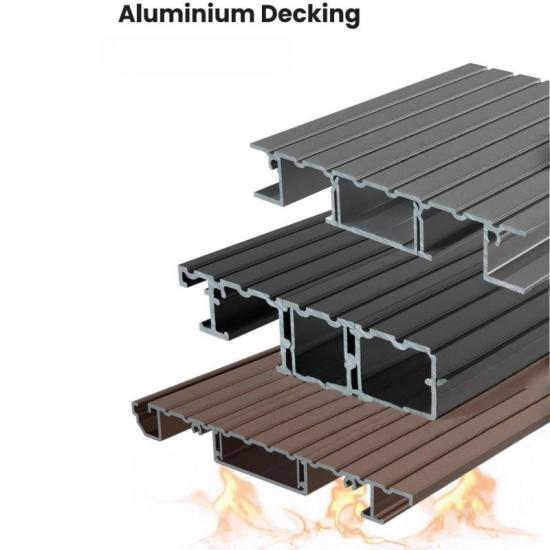
Fire performance is another quiet concern that surfaces late in a project, usually when a code official asks for documentation. Fluted aluminum panels built with flame-retardant properties, as specified by the manufacturer, help projects clear these reviews without swapping materials mid-build.
What Gives These Panels Their Depth
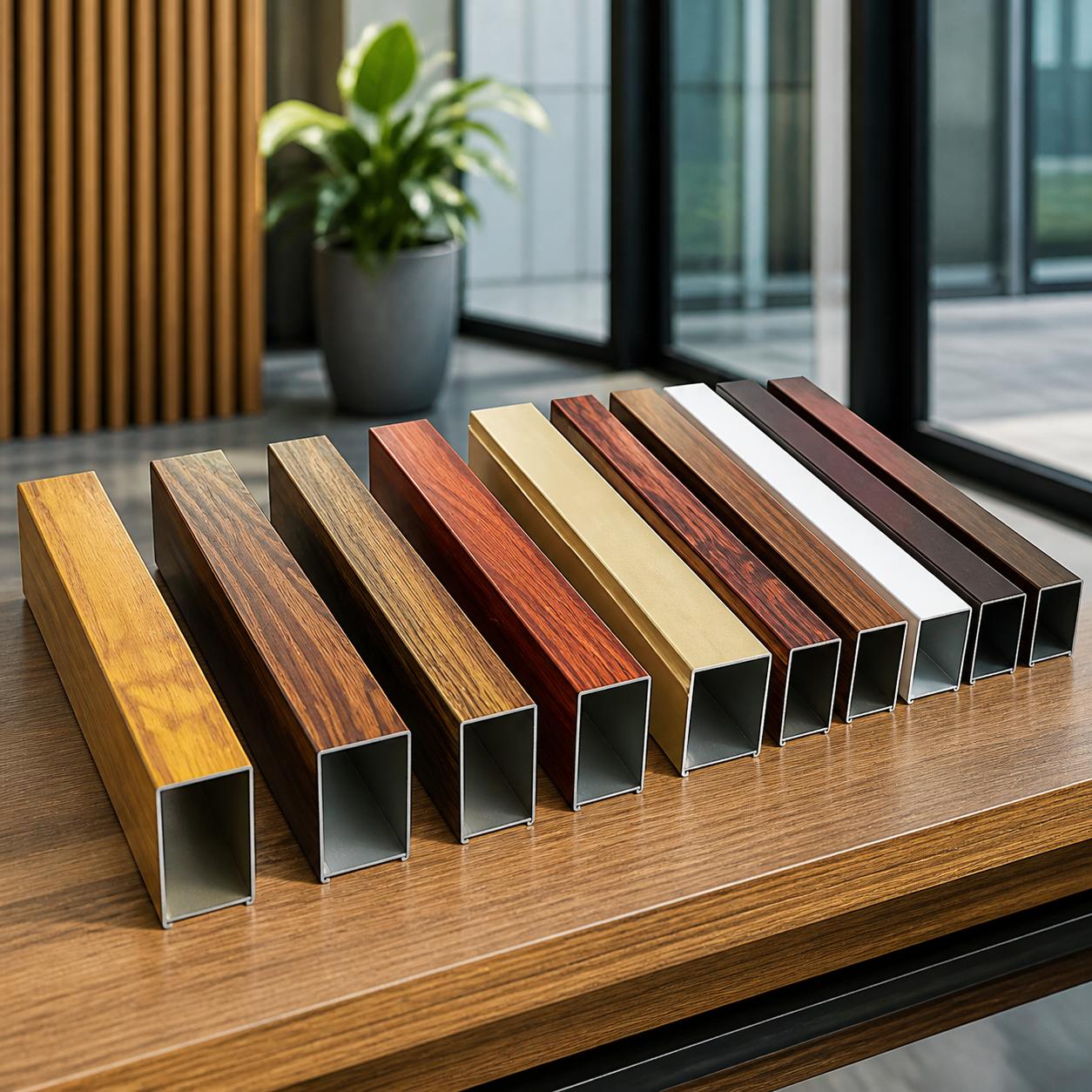
The defining trait of a Great Wall style aluminum veneer panel is the fluted, concave-convex surface. Instead of a flat sheet, the profile is extruded with alternating channels that catch light differently depending on the viewing angle and time of day.
That texture isn't decorative filler. It breaks up large flat expanses that would otherwise look monotonous on a big-box retail front or a long office corridor. Under raking light, the ridges throw shadows that shift throughout the day, giving a static building a bit of visual movement.
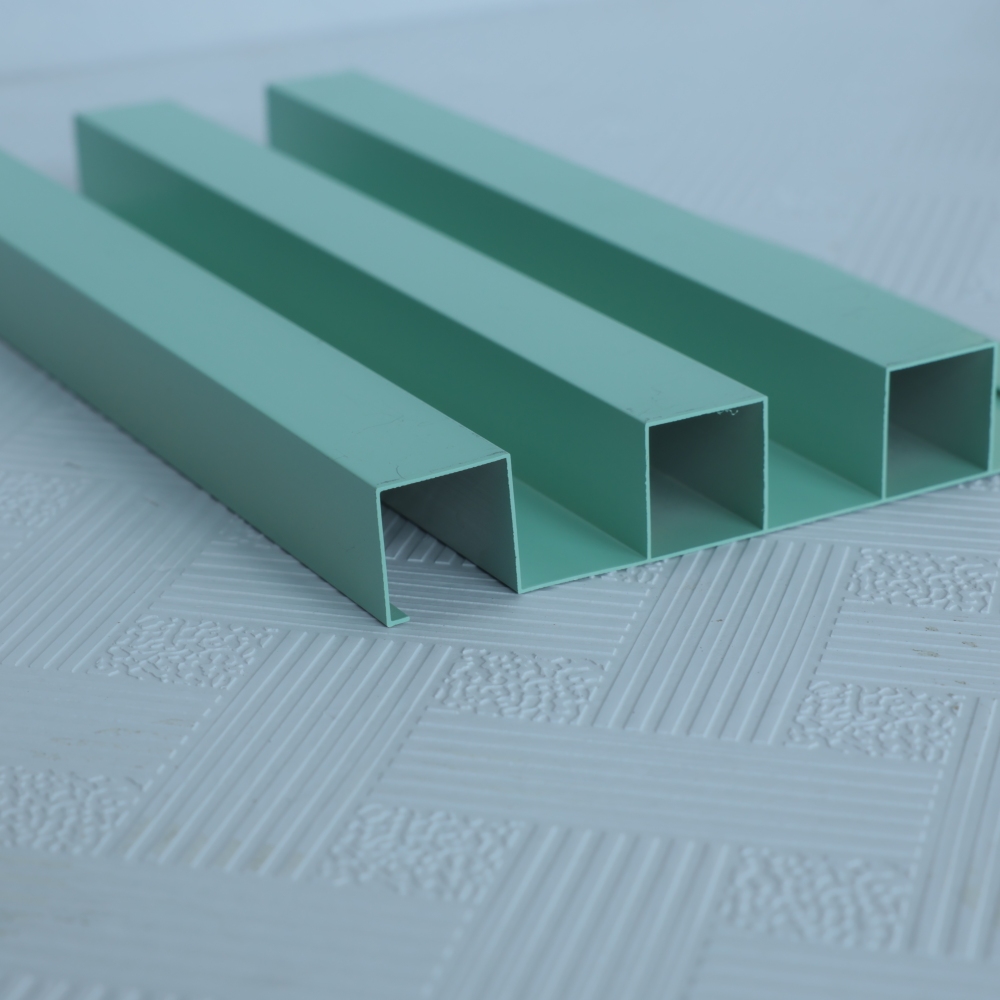
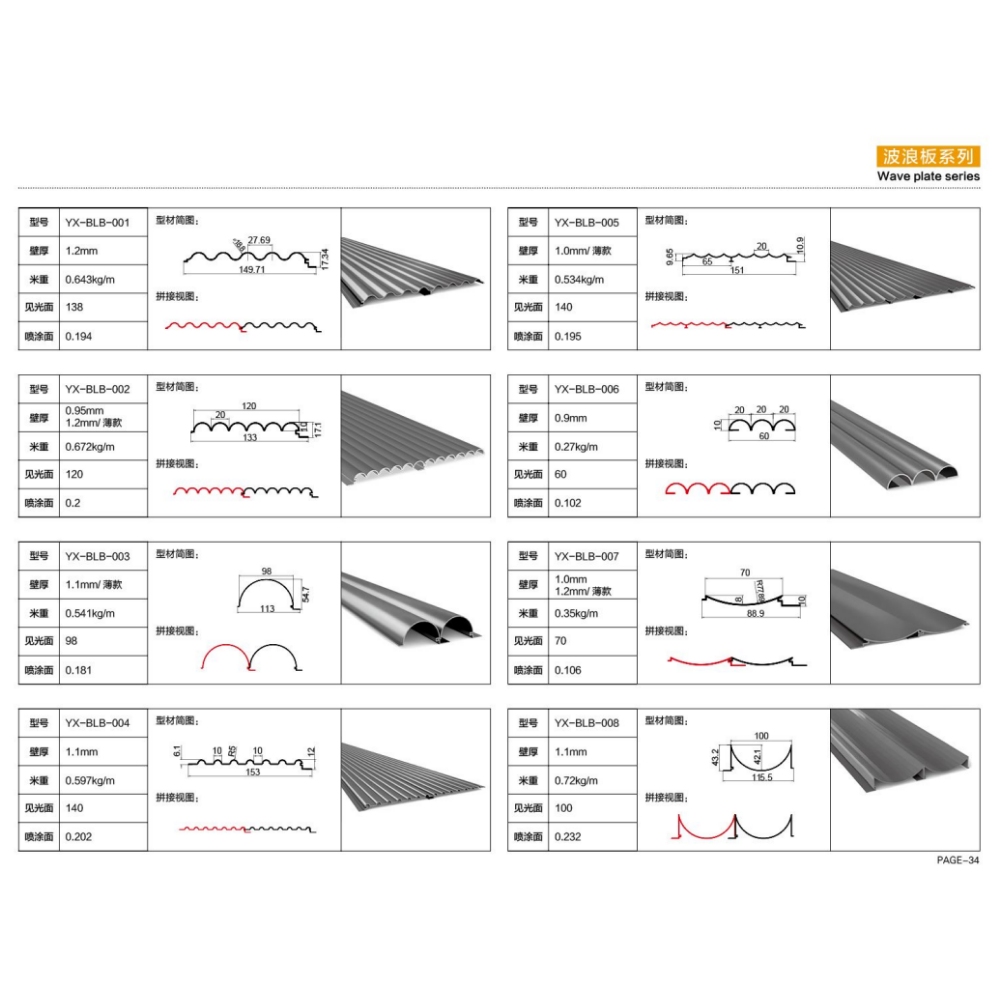
Because the flutes are hollow, square-channel extrusions rather than solid stock, the panels stay light enough for practical handling on site. That hollow structure is also why wall thickness and weight per meter vary so much across the model range, something worth checking before finalizing a spec sheet.
Reading the Spec Sheet Without Getting Lost
Manufacturers typically offer aluminum veneer panels across dozens of profile variants, and the numbers can blur together quickly. Here's a simplified look at the range one supplier's Great Wall panel series covers, based on the manufacturer's published specifications:
| Specification | Range |
|---|---|
| Material | Aluminum alloy |
| Wall thickness | 0.8mm – 2.9mm |
| Weight per meter | 0.112kg/m – 2.18kg/m |
| Surface finishes | Baking varnish, film coating, oxidation |
| Model variants | 32 distinct profiles |
Thinner-wall panels reduce shipping and structural loading, which suits large-format interior feature walls where spans are shorter. Thicker-wall variants make more sense on exterior facades exposed to wind loading and thermal cycling. Neither option is universally better; it depends entirely on where the panel ends up and what it needs to survive.
Interior Applications Most People Overlook
Exterior cladding gets most of the attention, but the same fluted aluminum profile does interesting work indoors. A floor-to-ceiling accent wall in a living room or lobby picks up ambient and recessed lighting in a way flat drywall never will.
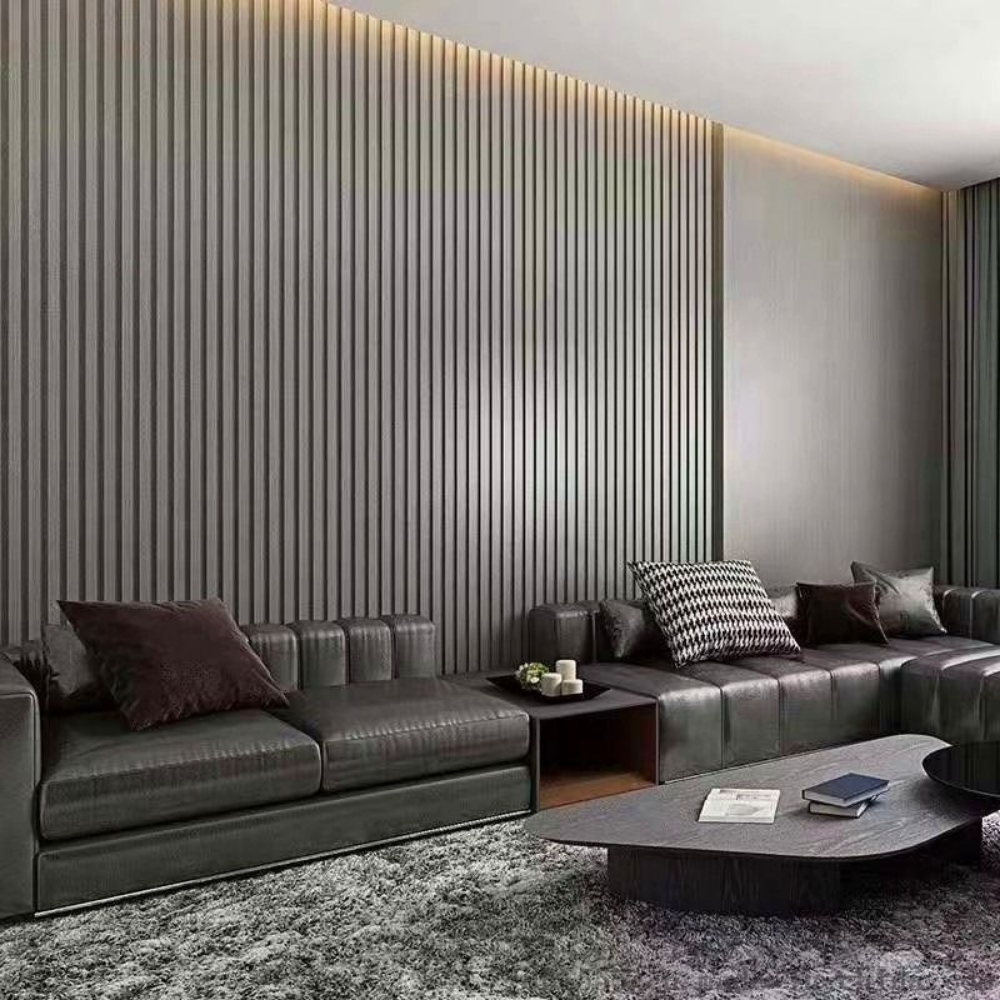
Retail interiors use the same panels for storefront backdrops and signage walls, where the texture adds shelf appeal without needing paint or wallpaper that will fade under store lighting. Column cladding and ceiling installations borrow the same logic, hiding structural elements while adding a finished, intentional look rather than a bare beam wrapped in drywall.
Common interior and exterior uses include:
- Building facades and rainscreen cladding systems
- Commercial lobbies and office reception walls
- Retail storefronts and signage backgrounds
- Residential accent and privacy walls
- Suspended ceiling panels and column wraps
Choosing a Finish That Matches the Environment
Surface finish isn't a cosmetic afterthought, it's a durability decision disguised as a color choice. The three common finishing methods for aluminum veneer panels each behave differently over time.
- Baking varnish (powder coating cured at high heat) gives a hard, even color layer that resists UV fading reasonably well and suits most exterior applications.
- Film coating applies a decorative laminate, often used to mimic wood grain, and works best in interior settings with less UV exposure.
- Oxidation, or anodizing, thickens the natural aluminum oxide layer chemically, producing a finish that's harder to scratch but limited in color range.
Coastal buildings generally lean toward baking varnish or anodized finishes because both resist salt exposure better than laminate films. Interior designers chasing a wood look without real wood maintenance tend to prefer film-coated panels instead, since UV degradation isn't a factor indoors.
Customization and Manufacturing Considerations
Because these panels are extruded rather than stamped, the tooling process allows for a wide range of custom profiles rather than a handful of fixed shapes. Colors, dimensions, and surface textures can all be adjusted to match a design brief instead of forcing the design to match a catalog.
That flexibility is only useful if the fabricator has the extrusion capacity to back it up. Producing consistent wall thickness down to under a millimeter across long panel runs takes tight process control, and it's a detail worth asking about before committing to a large order. For us, this is where scale matters: running multiple extrusion presses in parallel keeps lead times manageable even on custom fluted profiles ordered in bulk.
Frequently Asked Questions
Is an aluminum veneer panel heavier than a standard aluminum composite panel?
Not necessarily. Fluted veneer panels use hollow extruded channels, so weight per square meter often lands in a similar or lighter range than solid composite panels, depending on wall thickness chosen.
Can these panels be installed outdoors without extra coating?
Bare aluminum will still oxidize naturally, but for long-term exterior use, a baking varnish or anodized finish is the more reliable choice for resisting weathering and salt exposure.
Do fluted profiles trap dirt or water in the channels?
Vertical installation orientations generally allow rain to run off along the flutes rather than pooling, which is why most facade applications mount panels vertically rather than horizontally.
How many profile options are typically available?
Manufacturers with dedicated Great Wall panel lines often offer dozens of model variants, differing in flute depth, spacing, and wall thickness, to match different visual and structural needs.
Matching the Panel to the Project
Specifying an aluminum veneer panel ultimately comes down to matching three variables: where it's installed, what finish the environment demands, and how much structural load the wall thickness needs to carry. Get those three right, and the fluted texture that makes these panels visually distinctive will also be the part of the building that ages the slowest.
Related_News
-

Aluminum craftsmanship, a new chapter begins – Eugene Metals' New Year's greeting for 2026
-
Aluminum ingot prices continue to rise, and factories are flexibly adjusting their production capacity to cope with market fluctuations.
-
Aluminum Corrugated Panel: Choosing the Right Wave Profile for Facades and Interiors
-
Aluminum Trim Profiles: A Practical Guide to Finishing and Edge Protection
-
Choosing the Right Aluminum Extruded Square Tube for Your Project
SUBSCRIBE
Find Your Ideal Aluminum Solution
INQUIRY