
Aluminum Trim Profiles: A Practical Guide to Finishing and Edge Protection
Anyone who has ever tiled a floor or capped off a wall panel knows the finishing touch matters more than people expect. Aluminum trim profiles solve a problem that shows up late in most projects: raw edges, visible gaps, and transitions that look unfinished no matter how good the main material is. This guide walks through what these profiles actually do, how they're made, and how to pick the right one for a given job.
What Problem Do Trim Profiles Actually Solve
Every building material has an edge somewhere, and edges are where things go wrong first. Tile chips, panel corners fray, and gaps between materials collect moisture and dirt. A trim profile closes that gap mechanically, not cosmetically, which is why it outlasts caulk or paint-based fixes.
Wood and PVC trims degrade under UV exposure or humidity within a few seasons in harsher climates. Aluminum doesn't rot, and it doesn't need repainting every few years. That's the core reason architects and fabricators keep specifying it for both interior and exterior work.
Why Aluminum Alloy Outperforms Other Trim Materials
The alloy composition is what separates a trim profile that lasts decades from one that pits and corrodes within a few winters. Aluminum forms a natural oxide layer on its surface, which is what gives it corrosion resistance without any coating at all.
That said, raw mill-finish aluminum still benefits from additional surface treatment in most real-world settings, especially coastal or industrial environments with airborne salts or chemical exposure. Combined with its low density, aluminum trim is far easier to handle on site than steel or brass equivalents, which matters when a crew is working overhead or on a ladder.
- Lightweight handling: easier cutting, lifting, and fastening compared to steel trims
- Natural corrosion resistance: aluminum oxide layer resists rust without extra maintenance
- Dimensional stability: extruded profiles hold tight tolerances across long production runs
- Recyclability: aluminum scrap retains value, unlike most plastic trim waste
Common Shapes and Where Each One Fits
Trim profiles aren't a single product, they're a category. The shape dictates the job. A flat edge cap does something different from a floor transition strip, and mixing them up leads to gaps or visible seams later.
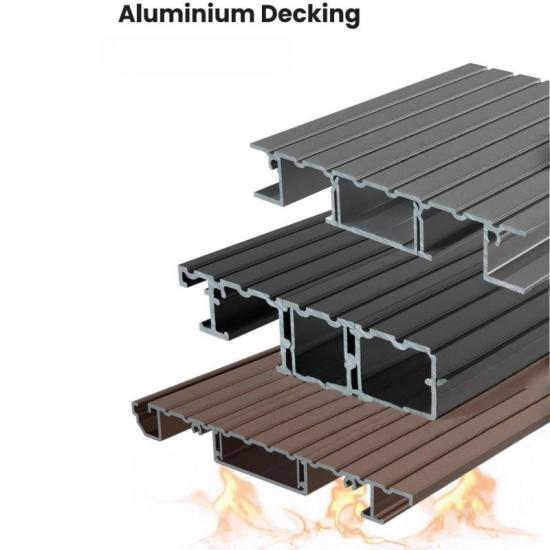
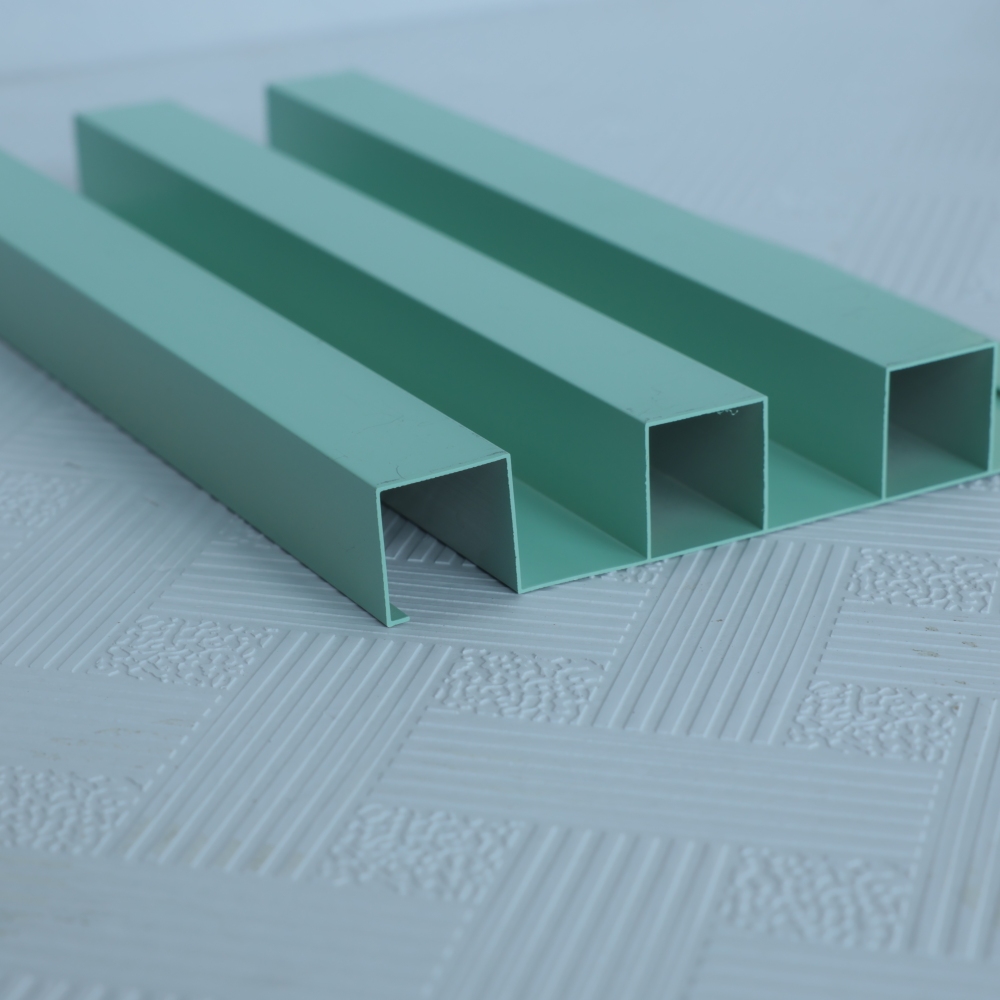
The cross-section above shows hollow, multi-chambered profile designs. This chambered structure isn't decorative, it's what gives an extruded profile rigidity without adding excess weight or material cost.
| Profile Type | Typical Application | Key Consideration |
|---|---|---|
| Edge caps | Panel and furniture edges | Matches panel thickness closely |
| Skirting boards | Wall-to-floor transitions | Needs consistent wall clearance |
| Flooring trim | Tile-to-tile or tile-to-carpet joints | Height difference between surfaces |
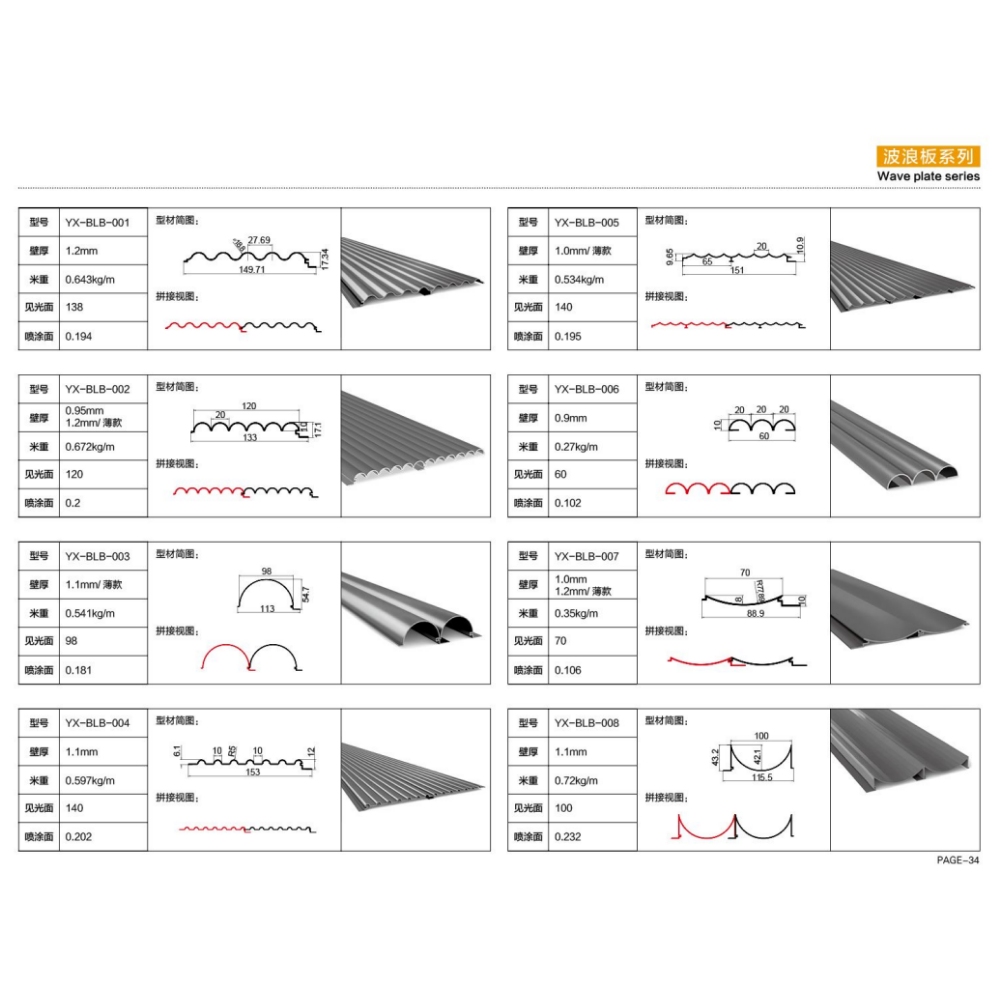
| Corrugated panel trim | Roofing and cladding edges | Weather sealing at overlaps |
| Tube and square sections | Structural framing, furniture legs | Load-bearing requirements |
Choosing between these isn't just aesthetic. A skirting board profile needs enough clearance to sit flush against an uneven wall, while a flooring trim has to account for the height gap between two different surface materials meeting at a joint.
Surface Finishes and What They're Actually For
Raw extruded aluminum can be used as-is, but most projects call for a finish, either for looks or for added protection. This is where a lot of buyers get confused, because the finish names sound similar but do different jobs.
Anodizing thickens that natural oxide layer electrochemically, which improves scratch and wear resistance while keeping a metallic look. Powder coating, on the other hand, applies a dry polymer layer baked onto the surface, giving far more color options but relying on the coating staying intact rather than the metal's own chemistry.
- Anodizing – best for a consistent metallic finish with improved surface hardness
- Powder coating – best when color matching or bold finishes are required
- PVDF coating – suited to long-term outdoor exposure where fading resistance matters
- Wood grain finish – used when a metal profile needs to visually match timber trim nearby
- Electrophoretic coating – applied for uniform, thin protective layers on complex profile shapes
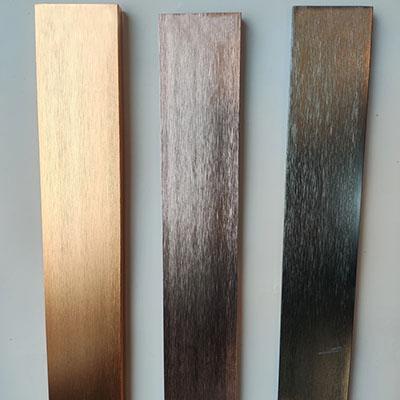
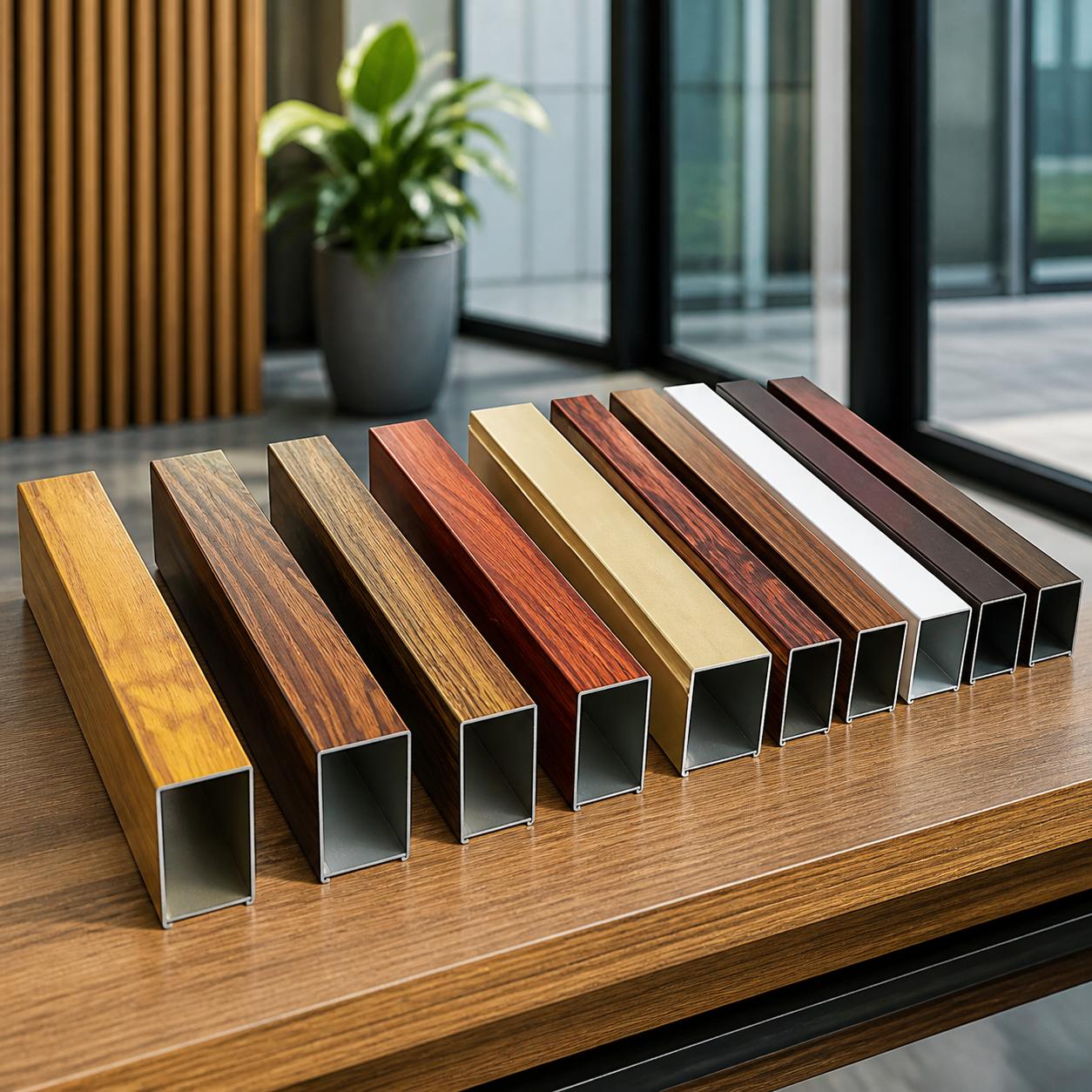
The sample image below shows how finish tone can shift within the same profile family, from a champagne gold to a darker bronze, all achieved through surface treatment rather than different base alloys.
Customization: Why Off-the-Shelf Sizes Often Don't Work
Standard trim profiles work fine for standard walls, but very few real buildings are that cooperative. Panel thicknesses vary between manufacturers, floor height differences aren't standardized, and older buildings especially tend to have irregular dimensions.
This is where custom extrusion becomes less of a luxury and more of a necessity. When a profile is extruded to match a project's actual drawings, it eliminates the on-site adjustments that eat up labor hours and often leave visible gaps anyway. Custom tooling does add lead time compared to stock profiles, so it's worth factoring into a project schedule early rather than as an afterthought when standard sizes don't fit.
For us at Youxin Metal, this kind of dimensional flexibility comes down to extrusion press capacity. Working with presses ranging from 600 to 1800 tons allows for both very thin-wall profiles, down to 0.4 mm in some cases, and heavier structural sections within the same production setup.
Matching Profile Choice to Application
Picking the wrong trim isn't usually catastrophic, but it does show up as a maintenance headache within a year or two. A few practical decision points help narrow things down:
- For wet areas like bathrooms or kitchens, prioritize finishes with strong corrosion resistance over decorative options alone.
- For exterior cladding or roofing edges, weather-rated finishes such as PVDF hold up better against long-term UV and moisture cycling.
- For interior furniture or cabinetry trim, wood grain or anodized finishes tend to blend better with surrounding materials.
- For structural framing components, prioritize wall thickness and alloy strength over surface finish considerations.
- For high-traffic flooring transitions, a harder anodized surface resists scuffing better than a soft powder coat.
Frequently Asked Questions
Does aluminum trim rust like steel?
No. Aluminum doesn't rust in the way steel does, since it forms a stable oxide layer rather than the flaking iron oxide seen on ferrous metals. It can still corrode under sustained exposure to certain chemicals or salts, which is why coastal or industrial projects often specify additional surface treatment.
Can trim profiles be cut to custom lengths on site?
Yes, extruded aluminum trim is generally cut with standard metal cutting tools on site. What can't easily be changed on site is the cross-sectional shape, which is why matching the right profile before ordering matters more than length.
Is anodized or powder-coated finish better?
Neither is universally better, they serve different needs. Anodizing tends to hold up better against abrasion since it's part of the metal's own surface, while powder coating offers a wider color range and works well when a specific decorative appearance is the priority.
How thin can aluminum trim profiles be made?
It depends on the manufacturer's extrusion capability. Some production lines, including ours, can produce ultra-thin wall sections down to around 0.4 mm, which is useful for lightweight decorative trim where excess material adds unnecessary weight.
Final Thoughts on Choosing the Right Trim Profile
Aluminum trim profiles sit at an odd intersection of structural detail and finish work, easy to overlook until something doesn't line up right. Getting the shape, alloy, and surface treatment matched to the actual application is what separates trim that disappears into the background from trim that becomes a maintenance problem. Whether the project calls for a simple skirting board or a custom-extruded structural section, working from accurate drawings and understanding the finish options available makes the difference between a clean install and a repeat visit. For projects with unusual dimensions or performance requirements, custom aluminum trim profiles remain the more reliable path compared to forcing a stock size to fit.
Related_News
-

Aluminum craftsmanship, a new chapter begins – Eugene Metals' New Year's greeting for 2026
-
Aluminum ingot prices continue to rise, and factories are flexibly adjusting their production capacity to cope with market fluctuations.
-
Aluminum Corrugated Panel: Choosing the Right Wave Profile for Facades and Interiors
-
Aluminum Veneer Panel Guide: Profiles, Specs, and Uses
-
Choosing the Right Aluminum Extruded Square Tube for Your Project
SUBSCRIBE
Find Your Ideal Aluminum Solution
INQUIRY