
Choosing the Right Aluminum Extrusion Profiles for Your Project
Picking aluminum extrusion profiles sounds simple until the drawings land on your desk and the alloy grade, wall thickness, and finish all need to match a load spec nobody wrote down clearly. That gap between "aluminum works fine" and "this specific profile meets the job" is where most procurement headaches start. Aluminum extrusion profiles are shaped by pushing heated aluminum billet through a steel die, and the die geometry, alloy choice, and post-extrusion finishing decide whether the part performs for ten years or cracks under the first hard freeze.
This piece breaks down what actually separates a workable profile from a wrong one, using real applications like curtain walls, heat sinks, and sliding door systems as the backdrop.
Why Profile Shape Dictates Performance More Than People Expect
An extrusion die is essentially a stencil for structural behavior. Change the wall thickness by half a millimeter and the load rating shifts, sometimes by a wide margin, because aluminum's strength comes from geometry as much as from the alloy itself. A flat bar and a T-slot channel made from the identical alloy will behave nothing alike under a lateral load.
That's why generic "aluminum bar stock" rarely satisfies a real engineering brief. Architectural systems need rigidity along one axis, sunroom frames need weather sealing channels, and assembly line framing needs mounting slots positioned to a tolerance. Custom-shaped profiles solve this because the die is cut to the actual load path, not to a catalog average.
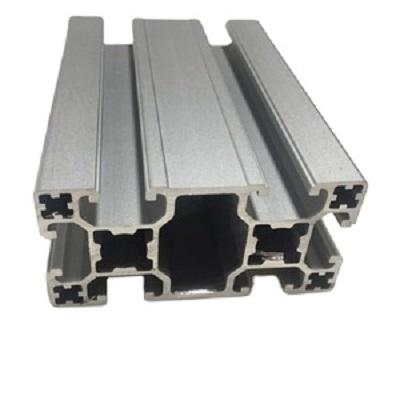
The image above shows a T-slot profile, a shape common in modular framing and workstation assembly. Notice the internal hollow chambers, they cut weight without sacrificing the stiffness needed at the mounting flanges.
Matching Alloy and Wall Thickness to the Load
Engineers often ask for "6061" or "6063" by habit, without checking whether the wall thickness actually supports the intended load. That's backwards. The better sequence is to define the load and environment first, then let the alloy and geometry follow.
A few practical questions narrow this down fast:
- Will the part carry structural weight, like a curtain wall mullion, or just hold a shape, like a decorative trim strip?
- Does it face outdoor weathering, coastal salt air, or constant UV exposure?
- Is thermal conductivity part of the job, as with a heat sink extrusion?
- Does the assembly need screw slots, snap-fit channels, or gasket grooves machined into the profile?
Answering these before finalizing tooling avoids a costly second die run. It also explains why full-cycle support, from design through tooling to final machining, tends to catch problems that a catalog part number alone would miss.
Ultra-Thin Wall Extrusions and Where They Actually Help
Thin-wall aluminum extrusion has a reputation for being fragile, which isn't quite fair. The real constraint is manufacturing precision, not the metal's behavior. Pushing billet through a die at a wall thickness as low as 0.4 mm demands tight control over press tonnage and die temperature, because a wall that thin will tear or wrinkle if the extrusion speed isn't matched to the alloy flow rate.
According to Youxin Metal's supplied production data, its line runs 13 large presses rated between 600 and 1800 tons and is capable of producing profiles down to 0.4 mm wall thickness. That matters for lightweight architectural trim and slim heat sink fins, where every extra tenth of a millimeter adds unwanted weight or blocks airflow.
Thin-wall sections aren't a fit for everything, though. Structural framing that carries repeated mechanical stress still calls for a thicker cross-section, and that's a tradeoff worth flagging early rather than discovering after installation.
Surface Finish Is a Functional Decision, Not Just an Aesthetic One
Raw aluminum oxidizes on contact with air, which actually protects it somewhat, but that natural oxide layer is thin and inconsistent. Surface finishing exists to control that protection deliberately rather than leave it to chance.
| Finish | Typical Use Case | Key Trait |
|---|---|---|
| Anodized | Architectural trim, curtain walls | Hard oxide layer, corrosion resistant |
| Electrophoretic (E-coat) | Window and door frames | Uniform coverage on complex shapes |
| Powder Coated | Exterior panels, railings | Wide color range, durable film |
| PVDF | High-exposure facades | Strong UV and weathering resistance |
| Wood Grain | Interior trim, flooring edges | Decorative wood-look surface |
Anodizing works by growing a controlled oxide layer electrochemically, which is why it holds up well on curtain wall mullions exposed to years of weather. Powder coating instead bonds a dry polymer film, giving broader color options for decorative panels where color matching matters more than raw hardness. PVDF coatings are typically specified for facades facing intense sun or coastal salt spray, since that finish class is built around long-term weather resistance. Wood grain finishes, meanwhile, solve a purely visual problem: getting a natural look on flooring trim or interior panels without using actual timber.
Choosing the wrong finish for the environment is a common, avoidable mistake. Powder coating an exterior panel that actually needs PVDF-level weathering, for instance, shortens its usable life considerably.
Common Applications That Reveal What Profiles Need to Do
Looking at where these profiles actually get installed clarifies the design priorities better than a spec sheet does.
- Curtain wall and sunroom systems need dimensional stability across large spans and weatherproof jointing, since thermal expansion over a wide facade can strain a poorly designed joint.
- Assembly line framing relies on T-slot or multi-channel profiles for fast, tool-free reconfiguration, which is why mounting slot placement matters as much as strength.
- Heat sink extrusions depend on fin geometry and surface area, not just alloy conductivity, to move heat away from electronics efficiently.
- Sliding door and window channels need smooth, precise grooves so hardware glides without binding, a tolerance issue more than a strength issue.
- Flooring and roofing trim prioritize finish durability and a consistent visual profile across long runs, since a visible seam or color mismatch is immediately noticeable.
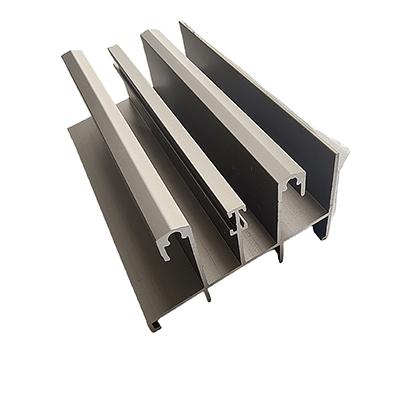
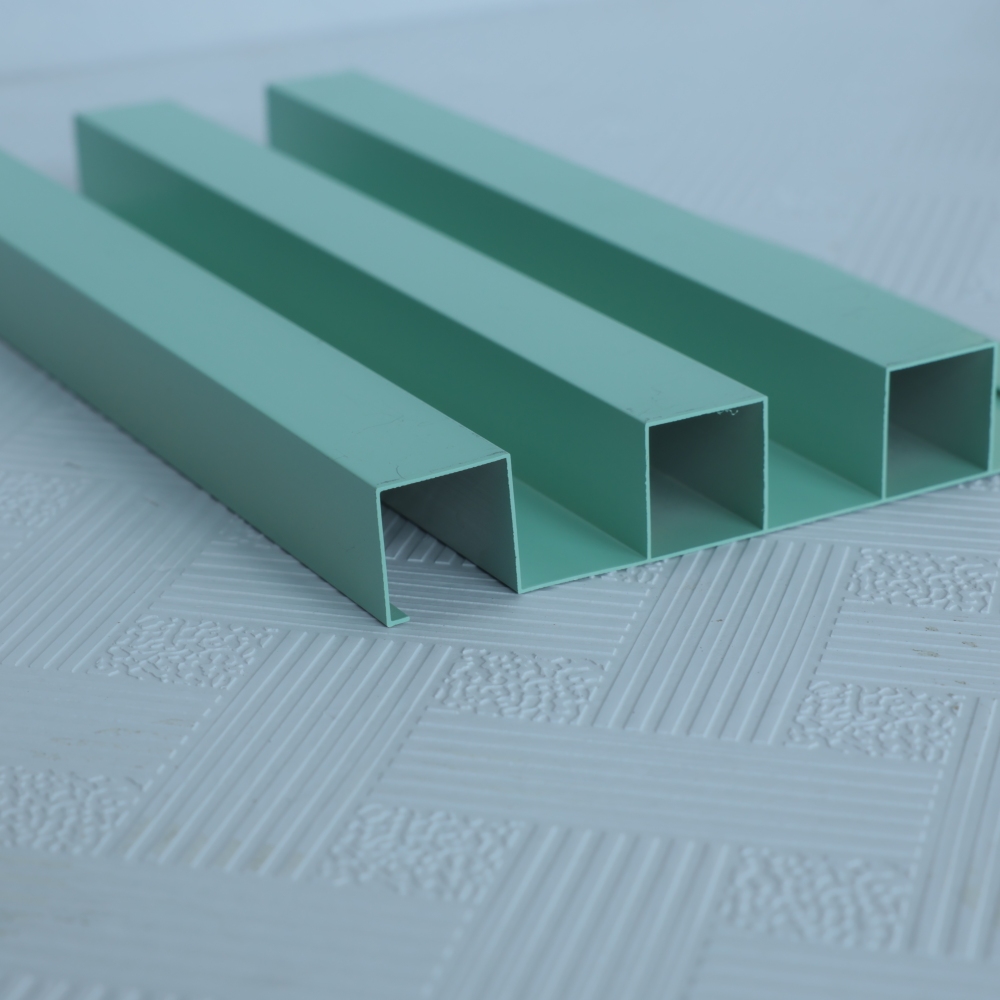
That multi-channel profile above illustrates the sliding door case well, the grooves are machined to a tolerance that keeps the hardware from binding over years of use.
Frequently Asked Questions
Does a thinner wall always mean a weaker profile?
Not necessarily. Strength depends on the combination of wall thickness, cross-sectional shape, and alloy temper. A well-designed thin-wall profile with reinforced ribs can outperform a thicker but poorly shaped one under the same load.
Can one profile design work across multiple finish types?
Usually yes, since the die shapes the aluminum before finishing is applied. The same profile can be run in anodized, powder coated, or PVDF versions depending on the project's exposure requirements.
Is custom tooling always more expensive than stock profiles?
For large or repeat orders, custom tooling often pays off because it eliminates secondary machining and reduces material waste from an ill-fitting stock shape. For small one-off runs, stock profiles may still be more economical.
What alloy is typically used for architectural aluminum extrusion profiles?
6063 and 6061 aluminum alloys are common choices for architectural and structural extrusions, though the right grade depends on the specific load, corrosion environment, and finishing plan.
Getting the Specification Right Before Tooling Starts
The recurring theme across all of this is sequencing: define the load, environment, and assembly method first, then let alloy, wall thickness, and finish follow logically. Skipping that order is how projects end up with a profile that looks right on paper but fails in the field.
For teams sourcing aluminum extrusion profiles at volume, working with a supplier that handles design, tooling, extrusion, machining, and finishing under one process tends to reduce the back-and-forth that a fragmented supply chain creates. For us, that full-cycle approach, backed by a production line built for both thick structural sections and ultra-thin 0.4 mm profiles, is what lets custom orders move from drawing to finished part without the usual guesswork. Whatever the application, from curtain walls to heat sinks, getting the aluminum extrusion profiles matched correctly to the job from the start saves both time and money down the line.
Related_News
-

Aluminum craftsmanship, a new chapter begins – Eugene Metals' New Year's greeting for 2026
-
Aluminum ingot prices continue to rise, and factories are flexibly adjusting their production capacity to cope with market fluctuations.
-
Aluminum Corrugated Panel: Choosing the Right Wave Profile for Facades and Interiors
-
Aluminum Trim Profiles: A Practical Guide to Finishing and Edge Protection
-
Aluminum Veneer Panel Guide: Profiles, Specs, and Uses
SUBSCRIBE
Find Your Ideal Aluminum Solution
INQUIRY