
Choosing the Right Aluminum Extruded Square Tube for Your Project
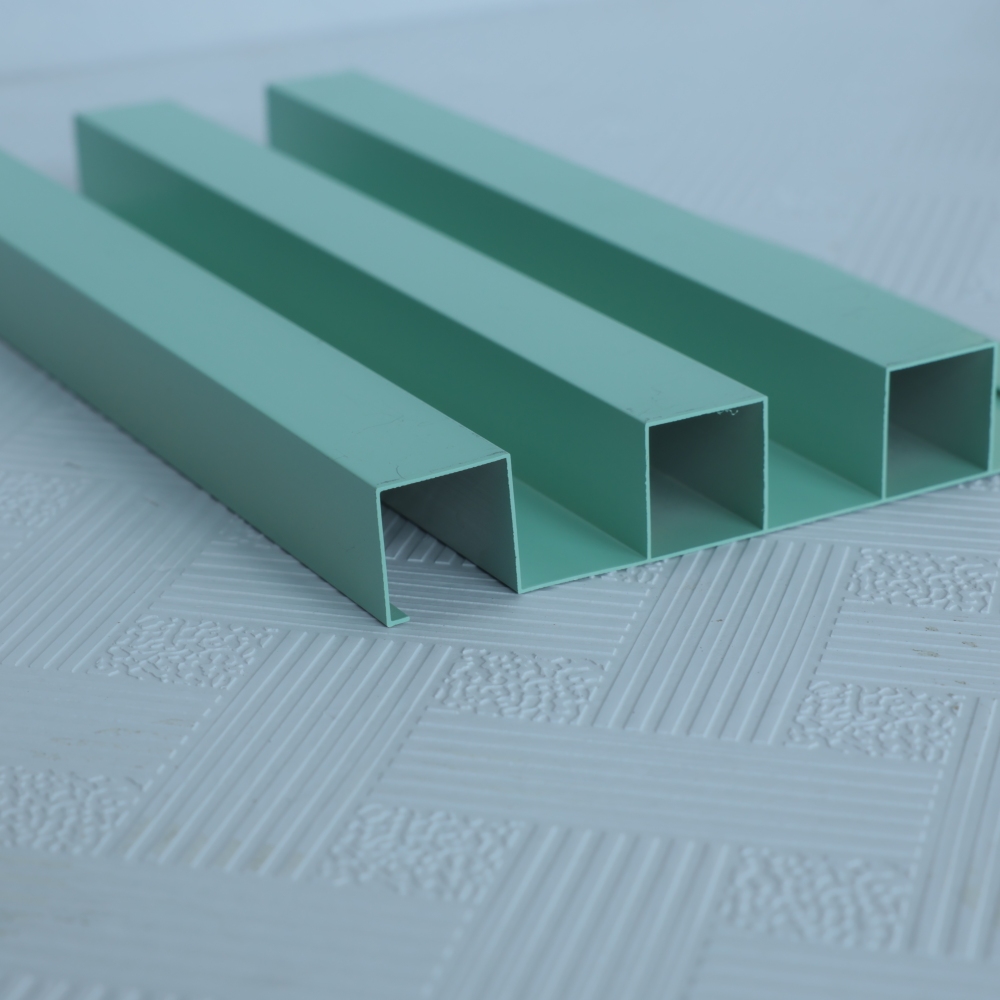
An aluminum extruded square tube looks simple on paper. Four flat sides, a hollow core, a consistent wall thickness. Yet the moment you try to source one for a real project, the simplicity disappears fast. Wall thickness varies by supplier, finish options are inconsistent, and cut tolerances that seem minor on a drawing can throw off an entire railing installation. This guide walks through what actually matters when specifying square tube profiles, so the part you order matches the part you need.
Why Square Geometry Matters More Than It Seems
A square cross-section carries load differently than a round or rectangular one. Because the moment of inertia is equal along both axes, a square tube resists bending the same way whether force comes from the top or the side. That symmetry is why designers reach for it in railings, frame corners, and partition systems where load direction isn't always predictable.
Round tube, by comparison, is easier to roll and bend but harder to join at clean right angles. Square tube welds and bolts together with flush corners, which is exactly what furniture makers and fabricators want when building something that has to look intentional, not improvised.
Material Behavior: Strength-to-Weight in Practical Terms
Aluminum alloy square tube trades some raw strength for a substantial weight reduction compared to steel. For structural framing, that trade-off usually favors aluminum, since most architectural partitions and equipment enclosures aren't carrying the kind of load that demands steel's tensile ceiling.
The strength-to-weight ratio also changes how a project gets installed. A steel-frame partition often needs two people and lifting equipment. An aluminum-framed version of the same size can frequently be handled by one installer, which shortens labor time and reduces the risk of on-site injury during assembly.
Dimensional stability matters just as much as weight. A tube that warps slightly during extrusion or cooling will throw off every downstream cut, so consistent wall thickness and straightness across a production run are what separate a usable batch from a frustrating one.
Wall Thickness and Size: Reading a Spec Sheet Correctly
Wall thickness is where most sourcing mistakes happen. A tube rated for light-duty shelving won't hold up under a railing that people lean on, and going thicker than necessary just adds cost and weight without benefit.
When comparing suppliers, look at how granular their thickness offerings are. A narrow range forces you to over-spec or under-spec your project. A wider range lets the wall thickness match the actual load path.
| Use Case | Typical Load Demand | Wall Thickness Consideration |
|---|---|---|
| Furniture legs and frames | Light to moderate | Thinner walls acceptable, focus on finish |
| Railing and fencing systems | Moderate to high, repeated stress | Thicker walls, weld-friendly alloy |
| Architectural partitions | Moderate, mostly static | Balance of thickness and surface finish |
| Industrial equipment structures | High, cyclical loading | Thicker walls, verified dimensional tolerance |
Getting this table wrong in either direction costs money. Over-speccing wastes aluminum. Under-speccing risks a failure that's expensive to fix after installation.
Fabrication: What Happens After the Tube Arrives
A square tube is only as useful as it is easy to work with. Cutting, drilling, and welding are the three operations that determine whether a fabricator can turn raw profile into a finished product without excessive rework.
Smooth surface quality and precise geometry reduce the friction in each step. A tube with uneven wall thickness will drill off-center. A tube with rough extrusion lines will show weld inconsistencies once ground down. These aren't cosmetic issues; they extend labor time on every unit produced.
For teams running custom fabrication projects, three fabrication qualities tend to matter most:
- Consistent squareness across the full length, so corner joints align without shimming
- Predictable wall thickness, so drilling and tapping don't break through unexpectedly
- Clean surface finish, so welded joints don't require excessive grinding before finishing
Surface Finish Options and Where They Fit
Raw mill finish works fine for hidden structural components, but visible applications call for something more deliberate. According to the product specifications, aluminum square tube is available in matte solid colors, including black, white, and grey, as well as wood-grain patterns that mimic finishes like walnut, cherry, and oak.
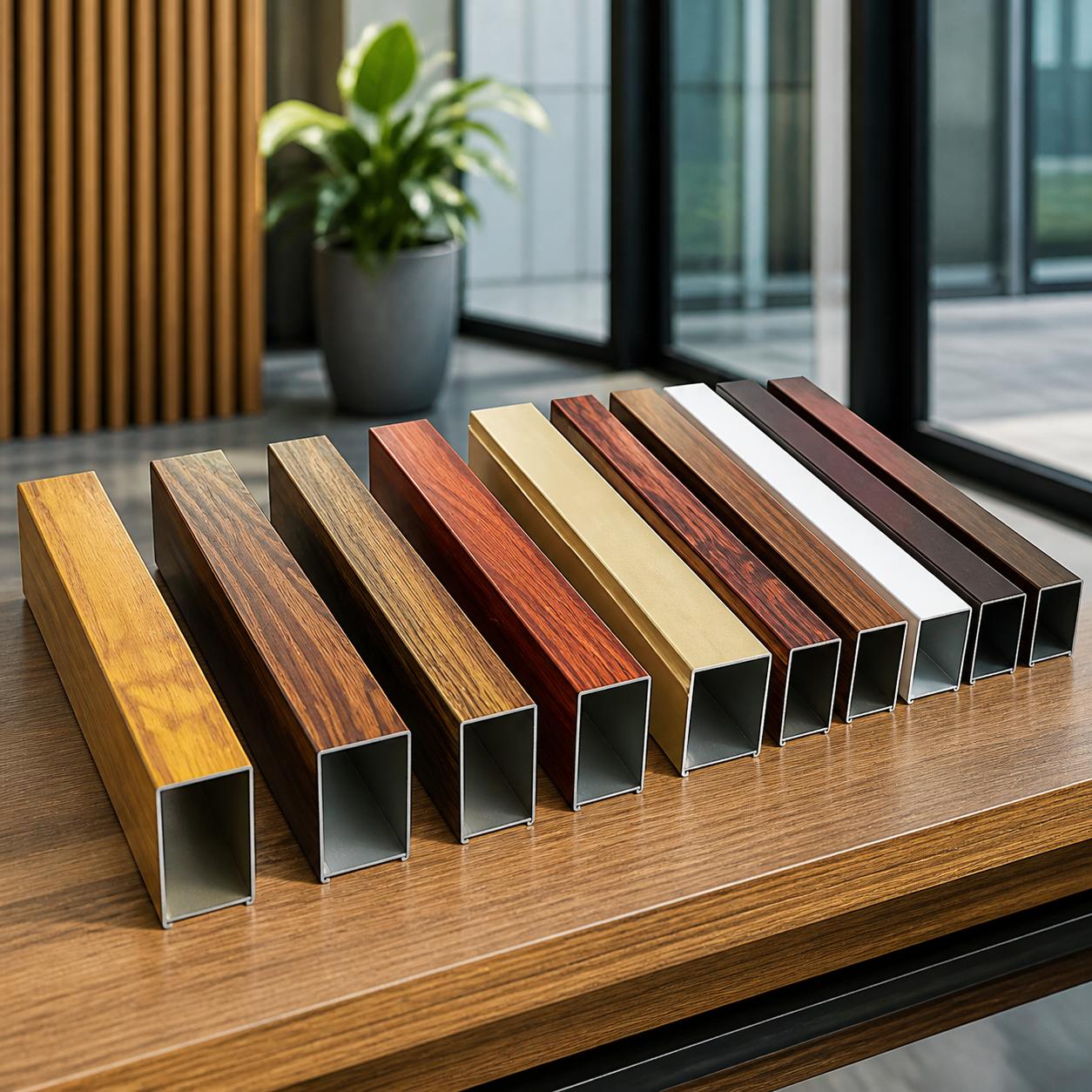
Wood-grain finishes on aluminum solve a specific problem: architects want the warmth of wood without the maintenance burden. A wood-grain aluminum railing won't rot, won't need refinishing after a few seasons outdoors, and won't warp the way solid timber can in humid climates. That's a meaningful advantage for exterior partitions or fencing exposed to weather.
Matte solid finishes, on the other hand, suit interior partitions and furniture where a clean, uniform look matters more than texture. The choice between the two isn't really about durability, since both hold up similarly under normal conditions. It comes down to whether the design language of the space calls for warmth or minimalism.
Matching the Tube to the Application
Different applications pull different priorities to the front. It helps to think through the decision in order rather than trying to optimize everything at once.
- Identify the load type first. Static architectural framing needs less wall thickness than a railing that absorbs repeated impact.
- Confirm the finish requirement second. Exterior wood-grain finishes and interior matte finishes serve different aesthetic goals, and mixing them up wastes budget on unnecessary customization.
- Check fabrication compatibility third. If the project involves heavy welding, confirm the alloy and wall thickness support it without excessive heat distortion.
- Verify dimensional tolerances last. Even a well-chosen tube causes problems if the actual cut length or corner squareness drifts from the spec sheet.
This order matters because reversing it, starting with finish and ending with load, tends to produce projects that look right in a showroom and fail under real use.
Common Applications in the Field
Aluminum square tube shows up across a wider range of projects than its plain geometry suggests:
- Architectural frames and partitions, where consistent squareness keeps sightlines clean
- Railing and fencing systems, where wall thickness needs to handle repeated lateral force
- Custom furniture manufacturing, where surface finish carries most of the design weight
- Industrial equipment structural components, where dimensional stability under vibration matters most
- Custom fabrication projects, where cutting and welding tolerances determine assembly speed
Each of these draws on a different combination of the properties covered above, which is exactly why a single generic spec sheet rarely satisfies every buyer.
Frequently Asked Questions
Does a thicker wall always mean a stronger tube?
Generally yes, but only up to the point the application requires. Beyond that, added thickness just increases weight and material cost without a functional benefit for that specific load case.
Can aluminum square tube be welded like steel tube?
It can be welded, though the process and filler materials differ from steel welding. Wall thickness and alloy selection affect how much heat the joint can absorb without distortion.
Is wood-grain finish as durable as a solid matte finish outdoors?
Both finishes are applied to the same underlying aluminum profile, so structural durability is comparable. The finish itself primarily affects appearance and how it weathers visually, not the tube's load-bearing performance.
What's the difference between square tube and U-profile in practice?
Square tube is fully enclosed on four sides, offering more consistent torsional resistance. U-profiles are open on one side, which suits applications like edge trims or channel mounting where access to the interior is needed.
Sourcing Considerations for Bulk or Custom Orders
Projects that need non-standard sizing or high-volume runs benefit from working with a supplier that can adjust wall thickness, length, and finish without treating every request as a special exception. For us at Youxin Metal, that flexibility comes from running multiple dedicated extrusion lines alongside a supporting surface treatment line, which keeps custom finish runs on the same production timeline as standard orders.
Buyers evaluating a supplier for aluminum extruded square tube should ask directly about available thickness ranges, minimum order quantities for custom finishes, and how dimensional tolerances are verified before shipping. A supplier that answers these clearly, rather than pointing to a single fixed catalog, is usually better positioned to support a project that doesn't fit an off-the-shelf mold.
Choosing the right aluminum extruded square tube ultimately comes down to matching wall thickness, finish, and fabrication method to the actual demands of the application, not the other way around. Get that sequence right, and the tube becomes a dependable, almost invisible part of the structure it supports.
Related_News
-

Aluminum craftsmanship, a new chapter begins – Eugene Metals' New Year's greeting for 2026
-
Aluminum ingot prices continue to rise, and factories are flexibly adjusting their production capacity to cope with market fluctuations.
-
Aluminum Corrugated Panel: Choosing the Right Wave Profile for Facades and Interiors
-
Aluminum Trim Profiles: A Practical Guide to Finishing and Edge Protection
-
Aluminum Veneer Panel Guide: Profiles, Specs, and Uses
SUBSCRIBE
Find Your Ideal Aluminum Solution
INQUIRY