
Anodized Architectural Aluminum Extrusion: Specifications and Selection Guide
Choosing the right building envelope material means balancing cost, longevity, and appearance under real weather loads. Anodized architectural aluminum extrusion solves this by converting the metal's own surface into a hard, integrated oxide layer rather than relying on a separate coating. For architects and fabricators comparing finish options, understanding how this process actually works, and where it performs best, makes the difference between a facade that ages gracefully and one that needs recladding within a decade.
Why Standard Aluminum Falls Short Outdoors
Raw aluminum does form a thin natural oxide layer on its own, but that layer is inconsistent and too thin to resist scratching or prolonged UV exposure. Left untreated, extruded profiles used on curtain walls or sunroom frames will show pitting, dulling, and uneven weathering within a few seasons.
The problem gets worse near coastlines or in industrial zones with airborne pollutants. Salt spray and acidic particulates accelerate oxidation on bare metal, and once corrosion starts under a surface coating, it tends to spread laterally beneath the finish. That's a different failure mode than what happens with anodizing, where there's no separate film to undermine.
What Anodizing Actually Does to the Metal
Anodizing is an electrochemical process, not a paint job. The extrusion is submerged in an electrolytic bath and an electrical current drives oxygen ions into the aluminum surface, growing a layer of aluminum oxide that becomes part of the substrate itself. This matters because the resulting layer cannot peel or flake the way a sprayed coating can, since there's no adhesive bond to fail.
That distinction is worth sitting with for a moment. A powder coat or PVDF finish is a shell wrapped around the metal. An anodized layer is the metal, chemically transformed at the surface. Scratch a powder-coated rail hard enough and you expose bare aluminum underneath. Scratch an anodized layer and you're still looking at oxide, just thinner in that spot.
Core Performance Benefits for Building Applications
The practical case for anodized profiles rests on a handful of measurable advantages that matter most in exterior and high-wear settings:
- Hard, integrated oxide layer that resists abrasion from wind-driven grit, foot traffic on trim, and repeated handling during installation.
- Corrosion resistance suited to long-term outdoor exposure, which reduces the likelihood of surface degradation on curtain walls and roofing-adjacent components.
- Finish permanence, since the oxide layer is part of the aluminum rather than a surface film, it won't peel or flake the way applied coatings eventually can.
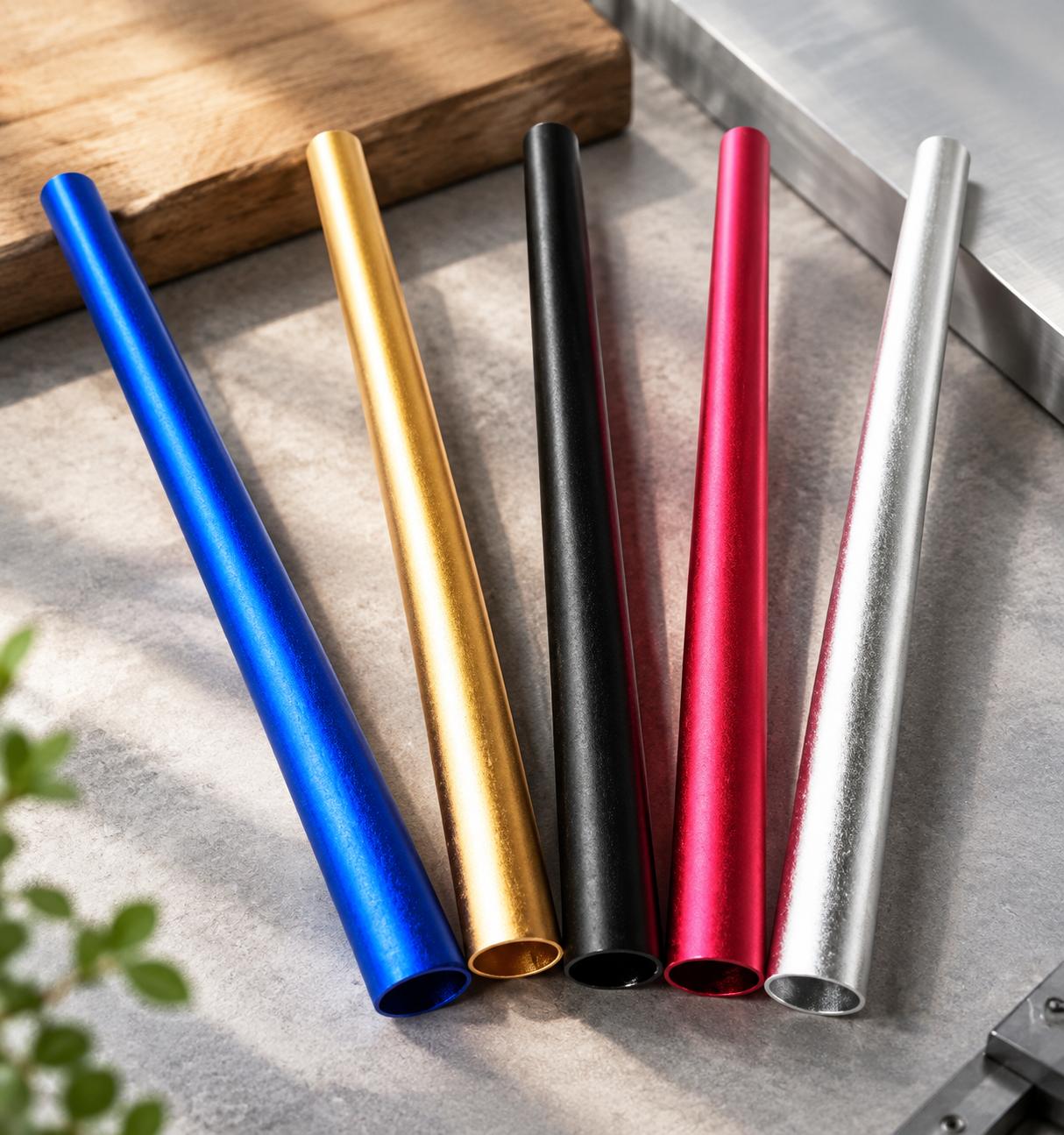
- Color and texture range, including natural silver, champagne, bronze, and black, letting designers match a building's material palette without sacrificing the underlying durability.
None of these benefits exist in isolation. A heat sink profile that resists corrosion but scratches easily during assembly isn't actually solving the maintenance problem; the abrasion resistance and corrosion resistance need to work together, and that's exactly what the integrated oxide structure is designed to do.
Where These Profiles Get Specified
Anodized aluminum extrusion shows up anywhere a project needs a finish that holds up without repainting cycles. Common applications include:
- Curtain wall systems, where large surface areas face sustained UV and moisture exposure over the building's service life.
- Industrial assembly line frames, where repeated contact and abrasion would quickly wear through a sprayed coating.
- Sunroom frames, which combine direct sun exposure with condensation cycles from interior-exterior temperature differences.
- Heat sink profiles, where the finish needs to survive thermal cycling without cracking or lifting.
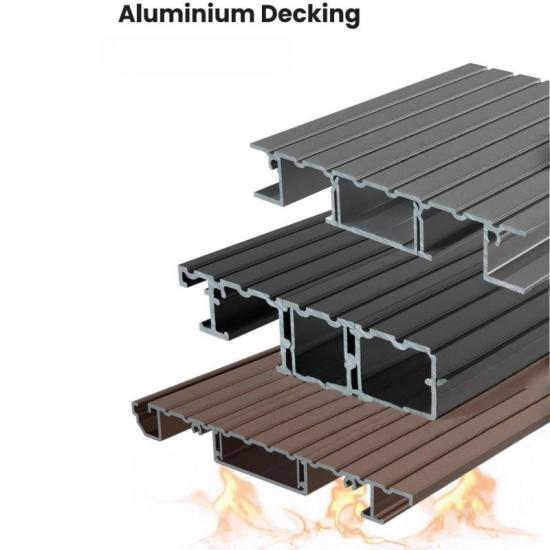
- Decorative trim, flooring trim, and roofing or drainage components, where visible edges need a consistent look across long runs.
Each of these cases shares a common thread: the material is expected to perform without regular intervention. That's a different design brief than, say, interior trim that gets repainted every few years as part of routine maintenance.
Anodized vs Other Common Surface Treatments
Specifiers often ask how anodizing stacks up against powder coating, PVDF, or electrophoretic finishes. There's no single "best" answer here; it depends on the exposure conditions and the aesthetic brief.
| Finish Type | Durability Mechanism | Color Range | Typical Best Fit |
|---|---|---|---|
| Anodized | Integrated oxide layer, part of the metal | Natural silver, champagne, bronze, black | High-abrasion, long-exposure exterior work |
| Powder Coated | Baked-on polymer shell over the surface | Wide custom color range | Interior fixtures, moderate exterior use |
| PVDF | Multi-coat fluoropolymer film | Broad range, strong color retention | Large-scale cladding needing color consistency |
| Electrophoretic | Thin electro-deposited coating, often paired with anodizing | Limited, often clear or bronze tones | Window frames needing sealed, uniform coats |
| Wood Grain | Printed or transferred wood-pattern film | Wood-tone patterns | Decorative interior and semi-exterior trim |
If a project needs the widest color palette with strong fade resistance over decades, PVDF is often the better call. If the priority is scratch and wear resistance in a fixed set of neutral tones, anodizing tends to win. Youxin Metal produces profiles across all of these surface treatments, so the choice can be matched to the specific exposure and budget rather than forced into a single process.
Alloy Selection and Extrusion Capability
Most anodized architectural profiles are produced from 6061 or 6063 aluminum alloys, chosen for their balance of extrudability and mechanical strength. The alloy choice affects how cleanly the anodized layer forms, since impurities or inconsistent grain structure in lower-grade aluminum can cause uneven oxide growth and visible mottling after treatment.
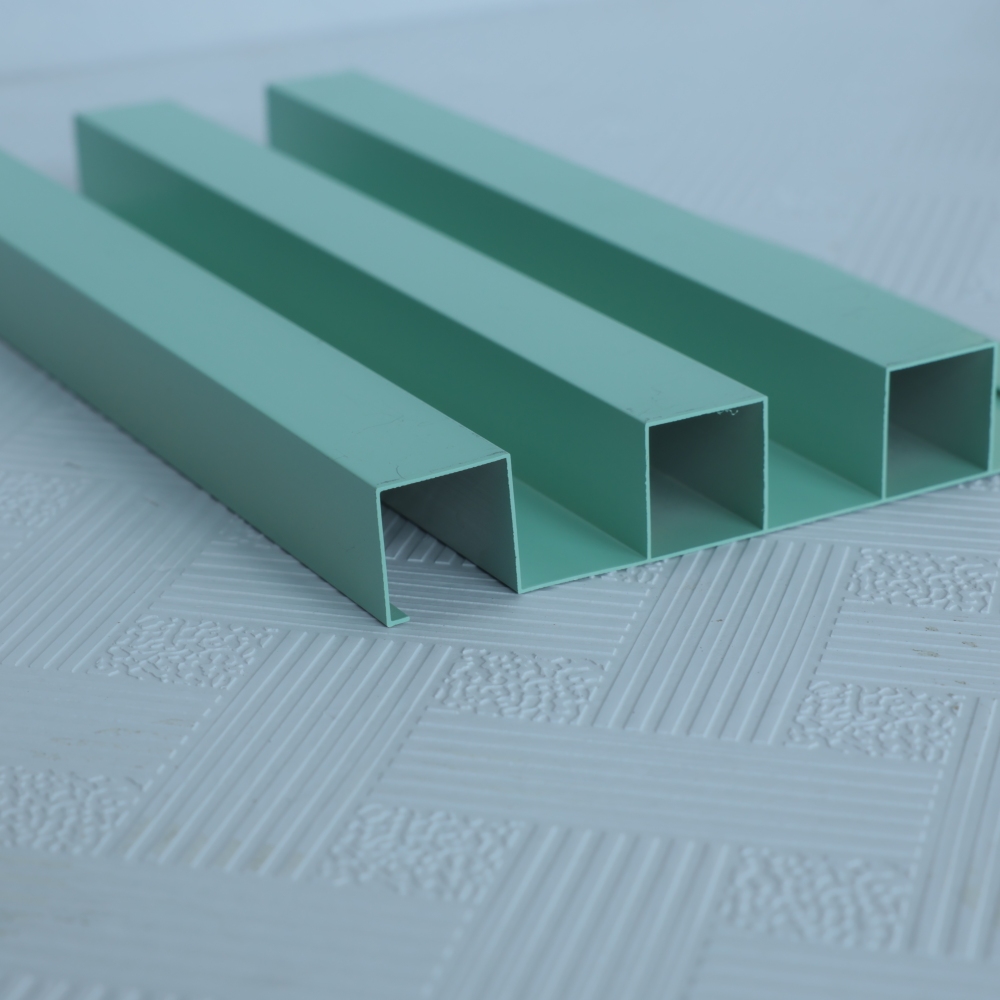
Profile geometry matters just as much as alloy chemistry. Complex architectural shapes, deep ribs, thin walls, or tight tolerances, require extrusion presses with enough tonnage and precision to hold dimensional consistency through the anodizing bath. Thinner-wall profiles are increasingly common in lightweight curtain wall and panel systems, since reducing wall thickness cuts material cost and shipping weight without necessarily compromising structural performance, provided the extrusion process can hold tight tolerances at that gauge.
How to Choose the Right Specification
Working through a specification decision for anodized extrusions usually comes down to four questions:
- What's the exposure environment? Coastal, industrial, or high-UV sites favor anodizing's corrosion resistance over coatings that can degrade from the edges inward.
- What color is required? If the palette fits within silver, champagne, bronze, or black, anodizing is a straightforward fit. Wider custom colors point toward powder coating or PVDF instead.
- Is the profile standard or custom? Standard extrusion shapes anodize predictably. Complex custom profiles, like decorative trim with intricate cross-sections, need a fabricator experienced in holding tolerance through both extrusion and surface treatment.
- What's the maintenance budget over the building's life? A higher upfront cost for anodized finish often offsets repainting or recladding expenses down the line, particularly on hard-to-access facade sections.
Running through these in order avoids the common mistake of picking a finish based on sample color alone, without checking whether that finish actually suits the site conditions.
Common Questions About Anodized Extrusions
Does anodizing change the dimensions of the profile?
The oxide layer adds a small amount of thickness to the surface, generally measured in microns, which is why tight-tolerance profiles need this accounted for during the extrusion design stage rather than after treatment.
Can anodized aluminum be welded or machined after treatment?
Machining after anodizing will cut through the oxide layer and expose bare metal at that point, so most fabrication work, cutting, drilling, welding, should happen before anodizing whenever possible.
Is anodized finish the same as sandblasted finish?
No. Sandblasting is a mechanical surface texturing step, often done before anodizing to create a matte or satin appearance; anodizing itself is the chemical process that forms the protective layer.
Will the color fade over time?
Anodized colors are generally more stable against fading than many organic coatings since the color is incorporated into the oxide structure itself, though exact fade behavior still depends on dye type and UV exposure levels.
Matching Fabrication Capability to Project Scale
Specification only matters if the fabricator can actually deliver it at the volumes a project needs. For us at Youxin Metal, that means running 13 large extrusion presses rated between 600 and 1800 tons, with the capability to produce ultra-thin profiles down to 0.4 mm alongside a dedicated surface treatment line for anodizing, powder coating, PVDF, and wood grain finishes. That combination lets architectural teams move from custom profile design straight into anodized production without coordinating between separate extrusion and finishing vendors.
Anodized architectural aluminum extrusion isn't a universal answer for every surface treatment question, but for projects facing sustained outdoor exposure, abrasive handling, or long maintenance intervals, it remains one of the more dependable choices available. Matching alloy, profile geometry, and finish color to the actual site conditions, rather than defaulting to whatever's already in a catalog, is what separates a facade that still looks right in fifteen years from one that doesn't.
Related_News
-

Aluminum craftsmanship, a new chapter begins – Eugene Metals' New Year's greeting for 2026
-
Aluminum ingot prices continue to rise, and factories are flexibly adjusting their production capacity to cope with market fluctuations.
-
Aluminum Corrugated Panel: Choosing the Right Wave Profile for Facades and Interiors
-
Aluminum Trim Profiles: A Practical Guide to Finishing and Edge Protection
-
Aluminum Veneer Panel Guide: Profiles, Specs, and Uses
SUBSCRIBE
Find Your Ideal Aluminum Solution
INQUIRY